Solar vs Diesel Generators for Nigerian Businesses in 2026
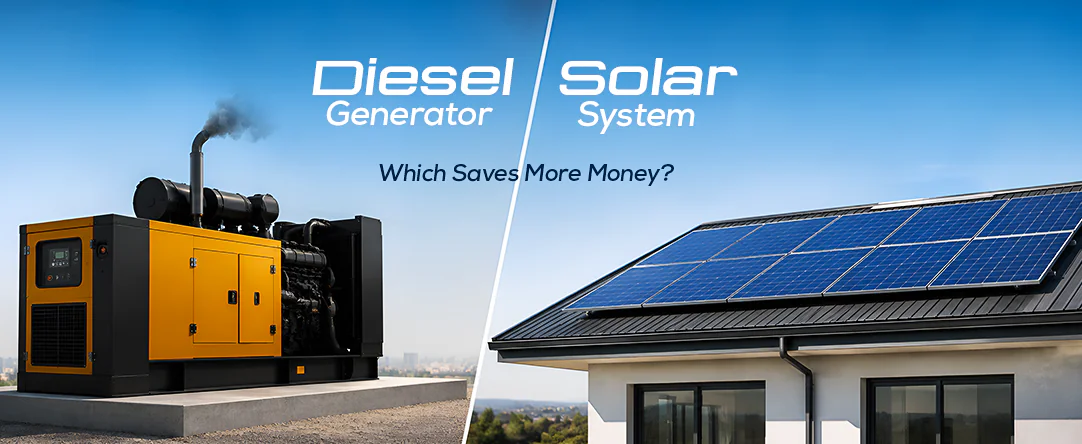
For most Nigerian businesses, electricity is now one of the highest monthly costs. Band A customers pay over ₦200 per kWh for a promised 20 hours of supply a day, and distribution companies often miss that target. Diesel has been trading around ₦2,000 per litre. So the question is no longer whether to plan for backup power. It is which source costs least over the next five to ten years.
This guide compares diesel generators and commercial solar on the numbers that matter to a business owner or facility manager.
Why so many businesses are switching
Nigeria imported about 2.9 million solar panels worth more than ₦435 billion in 2025. BloombergNEF now ranks it as sub-Saharan Africa’s largest small-scale solar market. The drivers are simple: an unreliable grid, high fuel prices and the cost of downtime. Banks, factories, hospitals and estates are all moving at least part of their load to solar.
The real cost of running a generator
The price of diesel is only part of it. A generator’s true cost includes:
- Fuel: a mid-sized generator can burn 8–10 litres an hour under load.
- Servicing: oil, filters and overhauls every few hundred running hours.
- Logistics and theft: fuel delivery, storage and pilferage.
- Downtime: lost output whenever a set fails or fuel runs out.
Illustrative example: a generator burning 8 litres an hour for 10 hours a day, 26 days a month, uses about 2,080 litres. At ₦2,000 a litre, that is roughly ₦4.2 million a month in fuel alone, before servicing.
What a commercial solar system costs
Solar has a higher upfront cost and a far lower running cost. A solar system has no fuel bill, few moving parts, and panels that typically last 20–25 years. Batteries usually need replacing every 5–10 years, depending on chemistry and how deeply they are cycled. Industry analysts estimate that a small 5 kW system can pay for itself in three to five years at current tariffs. Larger commercial systems often recover their cost faster because they displace more diesel.
Prices for panels and inverters have moved with the naira, so get a current quote rather than relying on last year’s figures.
Solar, diesel or hybrid?
Few businesses need to drop the generator on day one. The most common design we recommend is a hybrid system:
- Solar panels carry the daytime load.
- Batteries cover the evening and grid outages.
- The grid supplies power when it is available.
- The generator becomes a last resort, running a few hours a week instead of a day.
This cuts fuel use sharply without risking downtime. Under NERC’s newer rules, businesses can also earn credit for some of the power they export to the grid.
How to size a system for your building
An accurate design starts with a load audit. A good installer will:
- Measure your actual consumption by hour, not just the nameplate rating of your equipment.
- Separate critical loads (servers, cold rooms, production lines) from loads that can wait.
- Check your roof or ground space, orientation and shading.
- Size panels, inverters and batteries for your load, with headroom for growth.
- Plan protection: breakers, surge protection and earthing to Nigerian and IEC standards.
Why work with an engineering firm, not just a solar vendor
Commercial solar touches your whole electrical system: distribution boards, changeover, generator sync and protection. Pilot Science brings over 24 years of power and electrical engineering to every solar job, from design and installation to maintenance. We also supply Schneider Electric breakers and distribution boards, so the protection side is built in, not bolted on.
Frequently asked questions
How long do solar panels last in Nigeria? Quality panels typically carry 20–25 year performance warranties. Dust and heat reduce output, so schedule regular cleaning and inspection.
Can solar run air conditioners and machines? Yes, if the system is sized for them. Motors and compressors need inverters that can handle their startup surge.
Do I still need my generator? Usually as backup only. A hybrid design lets it run far fewer hours.
Call to action: Want to know what solar would save your business? Request a load assessment from our Lagos or Abuja team.